




Apple’s iPhone 18 series is shaping up to be one of the most groundbreaking releases in the company’s history. With whispers of under-display Face ID, a powerful new A20 chip, camera upgrades, and even a potential foldable iPhone, anticipation is soaring. In this comprehensive guide, we explore everything known so far about the Apple iPhone 18 lineup – from its expected models and release date to the revolutionary features that could make it a game-changer. The goal is to give you an in-depth look at how the iPhone 18 series might redefine Apple’s flagship smartphone experience.

iPhone 18 Lineup and Release Date:
Apple typically launches new iPhones each September, and current rumors point to September 2026 for the debut of the iPhone 18 Pro models. If this holds true, we should see the high-end iPhone 18 Pro and iPhone 18 Pro Max unveiled in fall 2026. Notably, industry insiders suggest Apple might shake up its schedule this cycle. One report claims the standard iPhone 18 could arrive a few months later – potentially in early 2027 – rather than alongside the Pro models. In this scenario, Apple would give the Pro devices a head start in late 2026, with the base model iPhone 18 (and possibly an iPhone 18 Plus) following in spring 2027.
This staggered release strategy, while unconfirmed, would be a bold departure from Apple’s usual cadence. It suggests a new approach where customers eager for the cutting-edge features (and willing to pay a premium) get the Pro models first, whereas the mainstream models follow later with perhaps slightly toned-down specs. Alongside the core lineup, there’s talk of an “iPhone Air 2” – a successor to the thin and light iPhone Air – joining the iPhone 18 family in 2026, likely emphasizing an ultra-slim design without compromising battery life.
Another exciting possibility on the horizon is Apple’s first foldable iPhone. Rumors indicate that a foldable, large-screen iPhone (unofficially dubbed the “iPhone Fold”) might launch in late 2026 alongside the iPhone 18 Pro models. This foldable device is expected to be a book-style phone-tablet hybrid, showcasing Apple’s take on foldable tech after years of development. If it appears, it would be a separate premium model – potentially the most expensive iPhone ever – complementing the iPhone 18 series lineup.
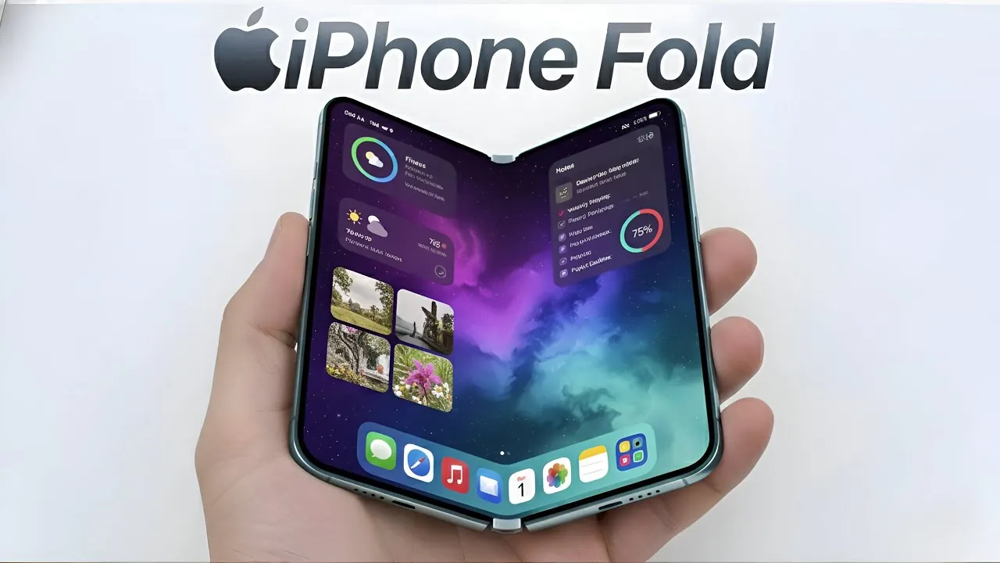
As for the iPhone 18 release date, mark your calendar for September 2026 for the Pro models’ announcement, with availability likely soon after. The standard iPhone 18 could then land by March 2027 if the split-launch rumors are accurate. This means Apple would effectively have two launch windows – one in fall and one in spring – for the iPhone 18 generation. It’s a strategy aimed at boosting sales by capturing early adopters with the Pro line and later appealing to mass-market buyers with the base models.
Price Expectations:
Official pricing for the iPhone 18 series won’t be known until Apple’s launch, but industry watchers predict a possible uptick. The new 2nm A20 chip and advanced components could raise manufacturing costs significantly – one report suggests the chip alone is 50% more expensive to produce. That added cost may well be passed on to consumers. In other words, the iPhone 18 Pro and Pro Max might see higher starting prices than the iPhone 17 series.
For context, the iPhone 17 Pro Max (256GB) debuted around the $1199 mark. The iPhone 18 Pro Max, with its cutting-edge tech, could inch higher (perhaps $1299+ for base storage), though Apple will try to stay competitive. Meanwhile, the standard iPhone 18 and any “Air” variant would target lower price points – likely similar to current iPhone 17 pricing – to attract mainstream buyers. Keep in mind these are speculative ranges. As we get closer to launch and more leaks surface, a clearer picture of Apple’s pricing strategy will emerge.
Design and Display Changes:
One of the most talked-about aspects of the iPhone 18 series is its design evolution. Don’t expect a total overhaul of the silhouette – reports say the iPhone 18 family will closely resemble the iPhone 17’s flat-edged design and size classes. The iPhone 18 Pro and Pro Max are expected to retain their 6.3-inch and 6.9-inch displays, respectively, with a familiar triple-camera “plateau” bump on the back. However, subtle yet significant changes to the front and back are rumored to make this generation feel fresh.
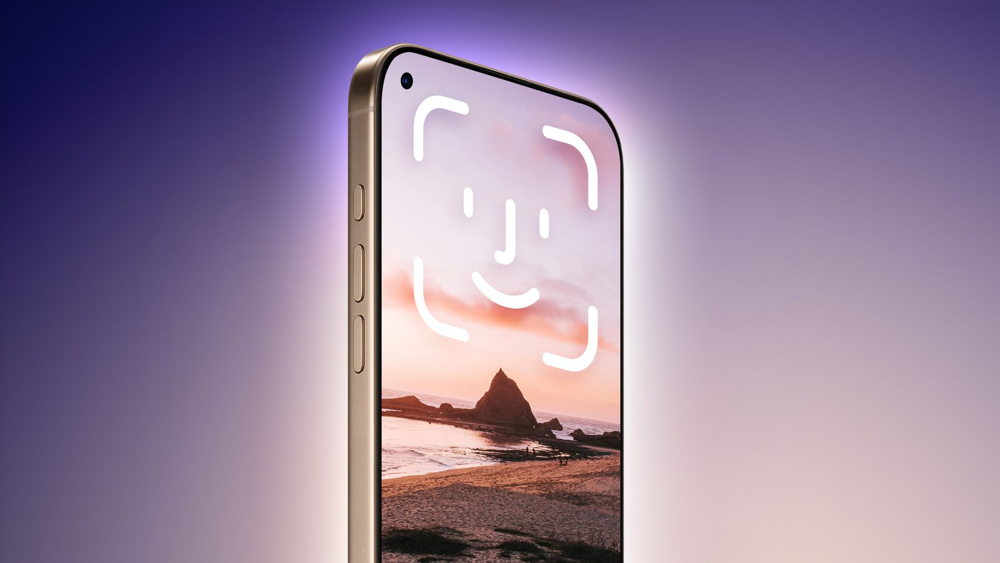
Bye-bye, Notch: Perhaps the biggest visual change could be the near-elimination of the notch (or Dynamic Island cutout). Multiple sources report that Apple will finally hide the Face ID sensors under the display on the iPhone 18 Pro models. This would allow for a much smaller front camera opening – likely a single hole-punch cutout positioned at the top-left of the screen. In other words, the iPhone 18 Pro’s display might be almost all-screen, interrupted only by a tiny dot for the selfie camera (as illustrated above). With the TrueDepth Face ID system moved beneath the OLED panel, the intrusive pill-shaped Dynamic Island from recent models could shrink or disappear entirely. It’s the closest we’ve come yet to the long-dreamed bezel-less, full-screen iPhone.
If under-display Face ID proves technically successful, the UI will likely adapt. Apple could potentially phase out the Dynamic Island interface elements, or have them only appear virtually when needed (for alerts or multitasking), since there may no longer be a physical black island to design around. Some analysts caution that fully invisible Face ID might not be ready across all models – if so, we might see a compromise like a smaller Face ID cutout or only the Pro models getting the under-screen tech. Nonetheless, the consensus is that the iPhone 18 series will take another step toward an uninterrupted front display.
Refined Aesthetics: In addition to the front design change, Apple is reportedly tweaking the back aesthetics. The iPhone 17 Pro introduced a two-tone rear glass (with a different finish on the camera island vs. the rest) that some found polarizing. For iPhone 18 Pro, Apple may adopt a unified back look, blending the camera bump and rear glass colors more seamlessly. Rumors also suggest new color options to distinguish the 2026 iPhones – prototypes in coffee brown, deep burgundy, and dark purple have been seen. Apple often experiments with colors, so final choices may vary, but bolder hues like these could join or replace the usual silver/graphite/gold palette.
Another intriguing rumor is that the iPhone 18 Pro might feature a transparent rear glass section, offering a peek at the device’s internals. This would hark back to nostalgic gadgets with see-through casings, albeit executed with Apple’s modern elegance. The transparent element likely wouldn’t reveal everything inside (and certainly not the messy bits), but could showcase parts like the wireless charging coil or battery outline as a design flair. If true, the iPhone 18 Pro could stand out as the first iPhone since the early 2000s to deliberately show some of its guts – a bold design move by Apple.
Build and Materials: Apple is expected to continue using premium materials: an aluminum frame for the standard iPhone 18 (or possibly stainless steel or titanium if an “Ultra” variant appears) and titanium alloy frame for the Pro/Pro Max (just as the iPhone 17 Pro series introduced titanium). The use of titanium keeps the large Pro Max relatively lighter while maintaining strength. The front will still be Ceramic Shield glass, and the back likely matte glass (possibly slightly frosted or textured differently for better grip).
The display technology will see incremental improvements. All iPhone 18 models should feature high-refresh-rate ProMotion (120Hz) OLED displays, a feature which by 2026 is expected to be standard even on non-Pro iPhones (finally doing away with 60Hz screens on any $1000 phone). Resolution and sizes remain roughly the same as the 17 series. However, because of the reduced notch, users will enjoy a bit more usable screen area on the Pro devices. There is speculation that Apple might achieve practically bezelless displays on the iPhone 18 by further shrinking the black borders. Some leaks claim the bezels could slim down to as little as ~1mm uniform around the screen, creating an immersive edge-to-edge effect. That said, producing ultra-thin bezels is challenging, so we’ll have to see if Apple hits this mark or opts for just a modest reduction from the iPhone 17’s bezel size.
Performance: A20 Chip and Hardware Upgrades:
The engine driving the iPhone 18 series will be Apple’s next-generation silicon, the A20 chip. Specifically, the Pro models are expected to use an A20 Pro variant – and it’s poised to be a huge leap in performance and efficiency. This SoC (system-on-chip) will be Apple’s first built on a cutting-edge 2nm process node, down from the 3nm process used for the A18/A19 chips. Shrinking the transistor size to 2nm means more transistors packed into the chip, yielding better performance per watt. In practical terms, the A20 could deliver faster speeds in everything from app loading and gaming to AI computations, all while extending battery life due to greater power efficiency.
Beyond just a smaller manufacturing node, the A20 Pro chip reportedly introduces a new Wafer-Level Multi-Chip Module (WMCM) packaging technology. In this design, Apple may integrate the RAM directly onto the same package as the processor (instead of separate memory chips next to the CPU). As a result, data can move faster between the CPU/GPU and memory, and the space saved could be used for other components or battery. This advanced chip packaging would boost overall performance and also specifically help with Apple’s AI and “Apple Intelligence” tasks. Apple is said to be heavily emphasizing on-device AI capabilities – from image processing to Siri – and the A20’s Neural Engine will be tuned for those. In fact, a more powerful LLM-based Siri (Apple’s AI voice assistant) is expected to debut by early 2026, and the iPhone 18 lineup will likely leverage this as a headline feature. The new Siri could perform more complex requests on-device thanks to the A20’s Neural Engine horsepower.
In terms of raw numbers, we can speculate the A20 Pro might offer 15-20% higher CPU performance and 20-30% better GPU performance over the A19 (found in iPhone 17 Pro). But more importantly, efficiency gains could extend battery life significantly despite the power boost. Early whispers suggest battery life on iPhone 18 Pro models will surpass their predecessors, thanks not only to the efficient chip but also a physically larger battery (more on that shortly).
Memory (RAM): The iPhone 18 generation might also get a memory boost. Currently, iPhone 17 Pro models have 12GB RAM, while base models have 8GB. Rumor has it Apple will up the ante – possibly giving all iPhone 18 models 12GB of RAM, and perhaps bumping the Pro variants to 16GB. More RAM would help with multitasking and with the aforementioned AI features that keep chunks of data in memory. This would be a welcome upgrade for power users who keep many apps open or use mobile productivity tools.
Battery and Charging: Apple continuously works on improving battery technology, and the iPhone 18 series could see both bigger batteries and new battery tech. The iPhone 17 Pro Max already had Apple’s largest battery to date, but Apple might go even further. One leak indicates the iPhone 18 Pro Max will be slightly thicker and heavier – likely to accommodate a higher-capacity battery. If the device’s thickness increases a millimeter or so, that could translate to a notable bump in battery mAh (and consequently longer usage per charge). The standard iPhone 18 and 18 Pro should also get incremental battery size increases.
On the technology front, Apple might introduce a stacked battery design or new materials. There’s chatter about a steel-cased battery being used in the iPhone 18 Pro Max, which could allow denser energy storage and improved safety (as steel-cased cells are more robust against swelling). Additionally, Apple has been researching silicon-carbon anode batteries, which can potentially hold more charge than current graphite-based cells. One report suggests the iPhone 18 (particularly a thin “Air” model) might use a silicon-carbon battery to either pack more capacity into the same size or to significantly slim down the device without losing capacity. If Apple manages to implement this, the iPhone 18 lineup could see a breakthrough in battery life or device thinness.
Charging-wise, expect the iPhone 18 to maintain the USB-C port that was adopted with the iPhone 15 due to EU regulations. Fast charging will likely improve marginally (perhaps support for up to 35W wired charging if they allow it, up from ~27W currently, to fill larger batteries faster). MagSafe wireless charging will continue, possibly with enhancements in efficiency or new MagSafe accessories launching alongside.
Camera Upgrades in iPhone 18 Series:
Apple never skips out on camera improvements, and the iPhone 18 series is no exception. In fact, camera upgrades are rumored to be among the headline features, especially for the Pro models. The key phrase this year is “variable aperture.” The iPhone 18 Pro and Pro Max are widely expected to introduce a variable aperture for the main camera – a first for iPhones.
Variable Aperture Main Camera
Currently, all recent iPhones have a fixed aperture lens (for example, the iPhone 17 Pro’s main camera is fixed at ƒ/1.78). A variable aperture means the camera’s iris could open and close mechanically, just like a professional DSLR camera, to let in more or less light. Apple will likely implement a two-stage or multi-stage aperture in the iPhone 18 Pro’s primary 48MP camera. For instance, it might switch between a wide aperture (around ƒ/1.7 or lower) for night shots and a narrower aperture (say ƒ/2.8) for brightly lit scenes. This capability gives photographers much more control: in bright conditions, a smaller aperture can avoid overexposure and yield sharper images with greater depth of field, whereas in low light a wider aperture lets in maximum light for better night photos.
Apple analyst Ming-Chi Kuo and others have been predicting this move. Variable aperture would allow true optical depth-of-field control on an iPhone for the first time – meaning you could get natural background blur (bokeh) without relying purely on computational Portrait mode. Want the background completely blurred out? Open up that aperture. Need more of the scene in focus? Stop it down. It’s an exciting prospect for mobile photography enthusiasts. Samsung tried a rudimentary variable aperture on its Galaxy S9 a few years ago (with just two stops, ƒ/1.5 and ƒ/2.4), but Apple’s implementation in 2026 could be more advanced and user-controllable.
In everyday use, the iPhone 18’s camera app might automatically adjust the aperture for optimal results – wide for dark scenes, narrower for daylight – while perhaps offering a manual “Pro” mode toggle for those who want to set it themselves. This hardware change, combined with Apple’s image processing, should yield photos that are better exposed in challenging lighting and have more artistic flexibility.
Other Camera Improvements:
The variable aperture is the star, but it’s not the only camera upgrade expected:
- Higher Resolution and Zoom: The iPhone 18 Pro Max will continue to offer a telephoto periscope lens (introduced on the 15/16 Pro Max) for long-range zoom. There’s a chance the smaller iPhone 18 Pro might also gain a periscope-style zoom this generation (if Apple can fit the necessary optics), giving it improved reach. At minimum, expect refinements to the telephoto lens and possibly a bit more optical zoom range or clarity. The ultra-wide camera should also get a new sensor or lens tweak for better low-light performance, as Apple iterates each cycle.
- Megapixels and Sensors: The main camera will likely remain 48MP in the Pro models (and possibly 48MP trickling down to the regular iPhone 18 as well). However, sensor improvements – like a new larger sensor for the main lens – could be in store, improving dynamic range and low-light capture. Some rumors even hint that the iPhone 18 Pro Max might feature a slightly bigger camera sensor than its predecessor, further boosting its photographic prowess.
- Front Camera: Selfie lovers have reason to cheer – the iPhone 18 series is rumored to feature a much higher resolution front camera. Reports point to a 24MP front-facing camera on all iPhone 18 models (or at least the Pro models). This would be a big jump from the 12MP front cameras iPhones have had for years. (Indeed, the iPhone 17 was expected to introduce a 24MP selfie camera, and that same module would carry over to the 18.) A 24MP selfie camera, combined with Apple’s software optimizations, would yield sharper, more detailed self-portraits and better 4K video from the front lens. It may also enable a wider field of view or improved Night mode for selfies.
- Camera App and Controls: The iPhone 18 lineup might refine how users control the cameras. Apple introduced a capacitive Camera Control button on the iPhone 16 and 17 series – a button used with touch gestures to adjust zoom, exposure, etc. Many found it finicky, and rumor has it that with iPhone 18, Apple will simplify this Camera Control interface, possibly removing the complex multi-gesture system and making it a more straightforward one-function button. This would improve usability, ensuring that accessing camera features (like switching lenses or tweaking settings) is more intuitive.
Overall, the camera improvements of the iPhone 18 series seem geared toward professional-grade capabilities: giving users more creative control (via variable aperture and improved manual controls) and enhancing image quality across the board. We expect Apple to heavily market photography and videography when unveiling these phones, as has been tradition, demonstrating how the iPhone 18 can replace even more of your dedicated camera gear.
Connectivity and Other Notable Features
Beyond design, performance, and camera upgrades, the iPhone 18 series will also bring advancements in connectivity and possibly some surprise features.
5G and Apple’s C2 Modem: One of the biggest under-the-hood changes is the shift to Apple’s in-house cellular modem. The iPhone 18 Pro and Pro Max are rumored to be the first Pro iPhones to feature an Apple-designed C2 5G modem, replacing Qualcomm’s modem chips. Apple has been developing its own modem technology for years, and it debuted a C1 modem in an iPhone 16e model. The C2 modem in iPhone 18 Pro should support the full range of 5G bands with improved efficiency. Notably, it’s expected to finally bring robust mmWave 5G support on Apple’s terms and possibly improved reception and speeds. By building the modem in-house, Apple can optimize power usage – which could mean better battery life when using cellular data.
Apple’s control over the modem also opens the door for unique features. For example, the iPhone 18 might enable satellite-based internet connectivity for more than just emergencies. Currently, recent iPhones can send SOS texts via satellite. Rumors suggest the new modem could allow limited web browsing or messaging via satellite networks when no cellular signal is available. In essence, future iPhones might keep you connected to basic internet services even in remote areas off the grid – a potential game-changer for travelers and outdoor enthusiasts. This aligns with Apple’s ongoing partnership with satellite service providers and the inclusion of custom RF components to communicate with satellites.
Wi-Fi 7 and Bluetooth 6: The iPhone 18 series is expected to upgrade to Wi-Fi 7 (the next-gen Wi-Fi standard) and likely Bluetooth 6 for local wireless connectivity. Wi-Fi 7 will provide faster speeds and lower latency, which benefits everything from streaming to gaming, while Bluetooth 6 (if finalized by 2026) could bring improvements in audio quality, range, and multi-device handling for things like AirPods. Additionally, Apple is likely to include support for the latest Thread and UWB (Ultra Wideband) technologies to enhance its ecosystem connectivity (for HomeKit smart devices, AirTag precision finding, etc.).
Software and iOS 20: Launching in late 2026, the iPhone 18 will run iOS 20 out of the box. We expect iOS 20 to be tailored to leverage the iPhone 18’s new hardware. For instance, if under-display Face ID is in use, iOS might introduce new UI behaviors for unlocking and notifications (perhaps the Dynamic Island concept will evolve into purely software-based indicators). With the likely boost in on-device AI, iOS 20 could offer more advanced Siri capabilities and machine-learning driven features – think smarter personal assistant actions, live transcriptions, or even AI image generation/editing features on the device. If the foldable iPhone launches, iOS 20 will certainly incorporate enhanced support for resizable apps and multi-pane multitasking, given the device can function as a phone when folded and a mini tablet when open.
Security and privacy will remain paramount. Even as Face ID moves under the screen, it will retain the same high level of security (with the infrared flood illuminator and dot projector working through the display). Apple may tout minor improvements in Face ID speed or angles of use. And with Apple’s continued focus on privacy, any new AI features will likely process data on-device thanks to that powerful A20 chip, rather than in the cloud.
Other Innovations: A quirky rumor for the iPhone 18 Pro is the mention of a transparent back panel or at least partially transparent design. As discussed earlier, this could be purely aesthetic – a way to stand out visually by showing some internals. There’s also talk that Apple might introduce new accessories or functionalities. For example, could we see reverse wireless charging (using the iPhone to charge AirPods or other devices)? It’s something Apple has explored and could enable via the large MagSafe coil if they choose.
We should also note improvements in durability. Each iPhone generation typically strengthens the glass or water resistance. By iPhone 18, Apple might offer IP68 or higher water resistance with ability to withstand deeper submersion, and even more crack-resistant glass formulations. If the iPhone 18 Air model is ultra-thin, Apple will have to innovate to maintain sturdiness (possibly using a stronger alloy or internal bracing to prevent flex).
Conclusion: A New Era for iPhone
The Apple iPhone 18 series is still many months away, but the picture that’s emerging is incredibly exciting. If the leaks pan out, the iPhone 18 lineup will mark a turning point for Apple’s smartphones. A combination of revolutionary design (nearly all-screen front), cutting-edge silicon (the 2nm A20 chip), and camera innovation (variable aperture lens, 24MP selfie, etc.) could make these the most advanced iPhones ever produced. Apple appears to be pushing boundaries on multiple fronts – even considering a foldable iPhone to redefine what an iPhone can be.
In summary, the iPhone 18 series seems poised to not just iterate on the iPhone 17, but to leap forward in capability and design. From under-display Face ID and satellite connectivity to record-setting performance, the iPhone 18 could usher in a new era of mobile technology. Of course, as with all rumors, we will have to wait for Apple’s official unveiling (likely in September 2026) to see how much of this comes true. But the consistency of reports from credible sources suggests Apple is gearing up for something big.
For Apple fans and tech enthusiasts, the iPhone 18 represents a future where our smartphones are more powerful, more immersive, and more versatile than ever. The countdown to this next-generation iPhone has begun – and if early indications hold, it might just be one of the most memorable iPhone launches in Apple’s history. Stay tuned as we update this article with the latest leaks and information leading up to the launch, and get ready for what could be a landmark release in the world of mobile technology.
Citatio
iPhone 18 Pro Features Leaked in New Report, Including Under-Screen Face ID – MacRumors
https://www.macrumors.com/2025/12/16/iphone-18-pro-features-report
Another rumor claims the iPhone 18 won’t launch until early 2027, while the iPhone 18 Pro may see minimal design changes | TechRadar
Another rumor claims the iPhone 18 won’t launch until early 2027, while the iPhone 18 Pro may see minimal design changes | TechRadar
Another rumor claims the iPhone 18 won’t launch until early 2027, while the iPhone 18 Pro may see minimal design changes | TechRadar
Another rumor claims the iPhone 18 won’t launch until early 2027, while the iPhone 18 Pro may see minimal design changes | TechRadar
iPhone Fold Leaks: Everything We Know About The New Device – Geeky Gadgets
https://www.geeky-gadgets.com/iphone-fold-design-leaked
iPhone Fold Leaks: Everything We Know About The New Device – Geeky Gadgets
https://www.geeky-gadgets.com/iphone-fold-design-leaked
iPhone 18 Rumors | Rokform.com
iPhone 18 Pro Features Leaked in New Report, Including Under-Screen Face ID – MacRumors
https://www.macrumors.com/2025/12/16/iphone-18-pro-features-report
iPhone 18 Pro Launching Next Year With These 12 New Features – MacRumors
https://www.macrumors.com/2025/12/23/iphone-18-pro-rumored-features-list
iPhone 18 Pro Features Leaked in New Report, Including Under-Screen Face ID – MacRumors
https://www.macrumors.com/2025/12/16/iphone-18-pro-features-report
iPhone 18 Pro Features Leaked in New Report, Including Under-Screen Face ID – MacRumors
https://www.macrumors.com/2025/12/16/iphone-18-pro-features-report
Another rumor claims the iPhone 18 won’t launch until early 2027, while the iPhone 18 Pro may see minimal design changes | TechRadar
Another rumor claims the iPhone 18 won’t launch until early 2027, while the iPhone 18 Pro may see minimal design changes | TechRadar