
Fast charging batteries, long-lasting battery cells, wireless charging solutions, solid-state batteries, and silicon anode technology are reshaping how we use phones, cars, and grids — speeding charge times, stretching usable life, and opening new, cable-free workflows for daily power. What this article does is cut through hype: explain the physics, show the engineering trade-offs, and give practical buying and policy guidance so you can tell which innovations are ready and which still need work.
Why this matters now
Battery performance sits behind almost every major electrification story: EV range anxiety, phone battery life, and how renewables can be stored at scale. The pace of progress has accelerated: public charging networks expanded aggressively in 2024, automakers and materials firms published concrete pilot and industrialization plans for solid-state and silicon-rich cells, and wireless charging standards have finally matured enough to matter for real products. For hard numbers on charging infrastructure growth, see the IEA’s Global EV Outlook.
Executive summary — what to expect in this article
- Technical overview: how chemistry, architecture, and software interact to enable fast charging and long life.
- The state of the art: who’s shipping what now (silicon anodes, higher-voltage packs) and which breakthroughs are on the near horizon (practical solid-state cells).
- Wireless charging: standards, efficiency trade-offs, and real use cases where wireless already makes sense.
- Buyer’s checklist and actionable guidance for consumers, fleet managers, and procurement teams.
- SEO-friendly metadata and WordPress-ready SEO fields (Rank Math–oriented).
1. What “fast charging” really means
Fast charging is relative. For handheld devices, “fast” might be 30–100 minutes to full or 0–50% in under 15 minutes. For EVs, consumers judge fast charging by the filler-stop experience: how much range they can add during a short break. The industry now talks in kW—150 kW, 350 kW, even 1,000 kW for specialized platforms. BYD’s public statements about a super e-platform capable of peak charging up to 1,000 kW show the engineering ambition and the headline potential, though wide consumer access depends on infrastructure rollout.
The physics in one line
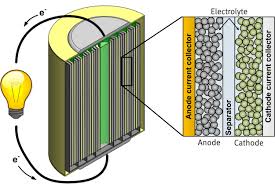
Charging speed is limited by how fast ions move through the electrolyte and penetrate electrode materials, and by the cell’s ability to shed heat. Push current too hard and you introduce damaging side reactions and mechanical stress.
Four technical levers that raise charging speed
- Electrode design and chemistry — increasing ion transport pathways and making electrodes tolerant of fast litigation/ delithiation.
- Electrolyte and interphase chemistry — additives and engineered SEI layers that remain stable at high currents.
- Pack architecture and thermal management — cooling, bus bar design, and high-voltage architectures (e.g., 800 V systems) that reduce currents for the same power.
- Charge control algorithms — adaptive BMS software that modulates charging profile to protect cells while extracting most of the speed.
2. Fast charging in practice: the trade-offs
Fast charging is a trade: speed versus life and cost. Repeatedly charging at peak rates accelerates certain degradation modes (SEI breakdown, lithium plating, and electrode micro-cracking). That doesn’t forbid fast charging — it just means systems must be engineered for it and users must understand the true limits.
Real-world evidence about degradation
Large-scale fleet analyses show that faster chargers are associated with slightly higher annual capacity fade. Geotab’s vehicle-level dataset analysis found a modest rise in average annual battery degradation as fast-charging use increased — a reminder that engineering controls and smart charging profiles matter when you use high-power chargers often.
Practical mitigation strategies
- Use fast charging sparingly for daily needs; rely on slower home charging for routine cycles.
- Prefer vehicles with robust thermal management and conservative sustained-power specifications (not just a high peak kW headline).
- Favor manufacturers that publish sustainable charge rates and warranty terms tied to real-world use.
3. The materials story: silicon anodes and incremental density
Silicon anodes offer a near-term path to more energy per cell because silicon stores far more lithium than graphite by weight. The main engineering hurdle is volume expansion: silicon swells dramatically when it alloys with lithium, which historically crushed cycle life.
How companies are making silicon practical
- Blended anodes — partial silicon blended with graphite to gain capacity without catastrophic swelling, already in commercial use.
- Nano-engineered silicon — silicon nanoparticles, porous scaffolds, and carbon-silicon composites that accommodate expansion. Firms like Sila and Group14 have made notable progress and secured investments to scale manufacturing for automotive supply chains. Panasonic and other OEMs are piloting silicon-powder integration too.
- Commercial rollouts — companies such as Enovix report milestones toward smartphone battery launches and pilot production, signaling real commercial movement.
Bottom line on silicon
Expect incremental energy-density gains in the near term from silicon–graphite blends and accelerated adoption as supply chains and large-scale manufacturing mature. Silicon will raise range and shrink pack size, but watch claimed cycle-life thresholds and independent test results before assuming big durability gains.
4. Solid-state batteries: hype trimmed to reality
Solid-state batteries (SSBs) promise higher energy density, faster charging, and improved safety by replacing liquid electrolytes with solid conductors. Recent industrial announcements indicate the field has moved out of pure lab-stage hype into pilot and pre-production phases: Toyota and Sumitomo Metal Mining announced cathode-material progress and are targeting practical deployment in the late 2020s — a signal that automakers see a credible pathway to scaled SSBs.
Where SSBs shine and where they still stumble
- Advantages: reduced flammability, potential for higher voltage chemistry and higher energy density, and in some designs, better high-rate tolerance.
- Remaining challenges: mechanical brittleness of ceramic electrolytes, manufacturing yield and cost, interface resistance between solid electrolyte and electrodes, and raw-material scale-up.
Realistic timeline
Expect niche commercial applications and pilot EV launches in the 2027–2030 window from major OEMs that have invested heavily in pilot lines. Broad automotive rollout depends on resolving manufacturing yield and cost obstacles.
5. Wireless charging: standards, efficiency, and where it fits

Wireless charging has matured from a slow, inefficient gimmick to multiple practical categories:
- Close-contact inductive (Qi, Qi2) — pads and stands for phones and wearables. The Wireless Power Consortium’s Qi2 standard improved alignment via magnetic attachment and increased power targets (15W and now higher in some certified devices), reducing friction for consumers and enabling broader car and accessory integration.
- Resonant mid-range — furniture and public spaces where small misalignment tolerances are acceptable and multiple devices can charge simultaneously.
- Dynamic and static EV wireless — road-embedded coils and in-garage vehicle pads. These systems are in pilots or small deployments; they offer convenience at the cost of lower efficiency than wired DC charging and higher infrastructure complexity. Technical reviews show improving performance but pilot status for most large-scale applications.
Efficiency trade-offs
Wireless charging is inherently less efficient than wired. For small devices the convenience can justify the loss. For heavy-duty EV fast charging, wired DC is and will remain the efficiency leader — unless road or operational logistics make wireless more practical despite losses.
6. System-level engineering: why cells alone don’t win races
Battery performance is a systems problem. A high-density cell without proper thermal pathways, cooling, and pack architecture will degrade quickly when asked to fast-charge. Conversely, a lower-density but thermally well-managed pack can support higher sustainable charging and longer usable life.
Key system elements
- Thermal design — even temperature distribution, module-level cooling plates, and heat pipes extend usable lifetime under stress.
- Electrical architecture — higher-voltage packs allow lower current at the same power, which reduces heating and makes ultra-fast charging more practical.
- Software — BMS strategies that adapt charge curves by state-of-health, temperature, and user needs can extract speed while protecting cells.
7. Safety: the engineering non-negotiable
Higher energy and faster charging elevate safety demands. Companies layer protections: conservative charge limits at high state of charge, redundant sensors, fast-acting contactors, and cell-level safeguards. Solid electrolytes reduce flammability, but new chemistries and manufacturing defects create novel failure modes — so testing, certification, and transparent second-party validation matter.
8. Market snapshot — who’s moving and what they promised
- BYD unveiled a super e-platform with claims of peak charging up to 1,000 kW for some applications, illustrating where extreme charging ambitions lie. These claims showcase technical possibility but depend on charger access and vehicle-level thermal strategy.
- Toyota + Sumitomo advanced cathode materials for all-solid-state batteries and set production-step targets for the late 2020s — concrete movement from materials labs toward supply lines.
- Charging networks and standards: Global public charging stock saw a large expansion in 2024 — more than 1.3 million public chargers were added that year — which matters because charger density controls how much consumers can realistically use high-power charging.
- Wireless standards: Qi2 has pushed better alignment and faster rates, and device approvals for higher power wireless charging are appearing in smartphones and accessories.
- Materials companies: Firms such as Sila, Group14, Enovix, and others are progressing commercialization plans for silicon anode materials or silicon-dominant cells; investments and pilot plants show the sector moving into production scaling.
9. Buyer’s guide — how to evaluate products today
Whether you’re picking a phone, EV, or home storage system, here’s how to separate marketing from meaningful engineering.
For phones
- Check whether the phone supports industry-standard fast-charging protocols and Qi2 if wireless convenience matters.
- Look for thermal throttling behavior documented in independent reviews. Fast peak numbers matter less than realistic sustained charging behavior.
For EVs
- Don’t be seduced by peak kW alone. Ask for the sustainable charge curve: how long the vehicle will maintain a high rate and how fast it tapers.
- Evaluate the thermal system and look for third-party battery degradation data or warranty terms that specify capacity retention. Geotab’s fleet-level data shows a modest increase in degradation rates with higher fast-charging reliance, so design and warranty matter.
For home and commercial storage
- Confirm the BMS features, software update policies, and recyclability or second-life plans.
- For heavy-use scenarios (fleet depots, grid services), prefer systems that can be cooled and have clear thermal management documentation.
10. Policy and infrastructure — what governments and utilities should prioritize
- Invest in grid upgrades and local energy buffering to allow many high-power chargers without destabilizing local distribution. IEA data on charger growth highlights the scale of infrastructure expansion that already happened in 2024.
- Fund materials and recycling capacity to prevent new supply-chain bottlenecks as silicon and solid-electrolyte precursor demand rises.
- Support pilot corridors for dynamic wireless charging to test cost-effectiveness and safety in real-world conditions.
11. Practical roadmap: near-term wins vs. long-term bets
- Near-term (2024–2027): incremental silicon-anode adoption in blends, expanded fast-charging networks, broader Qi2 device adoption.
- Medium-term (2027–2030): pilot solid-state-powered vehicles from leading OEMs and scaled silicon anode materials in some EVs and premium phones.
- Long-term (2030+): mainstream solid-state if manufacturing and costs improve; dynamic wireless charging in specialized corridors where economics justify infrastructure investment.
12. My practical recommendations (short checklist)
- For daily users: charge overnight at home; use fast chargers when needed; prefer devices and vehicles with transparent charging and warranty policies.
- For fleets: model charging patterns to minimize repeated high-power peak use; invest in depot-level thermal and charging infrastructure.
- For policymakers: prioritize grid upgrades, recycling, and pilot funding for new charging paradigms.
13. Closing — the reality under the hype
What this really means is simple: batteries are not a single technology. The fastest, longest-lasting, or most convenient battery depends on chemistry, manufacturing, system design, and how you use it. The next five years will deliver meaningful commercial silicon adoption, broader fast-charging access, and clearer product differentiation. Solid-state and dynamic wireless hold major promise but require industrial-scale breakthroughs in manufacturing and standards before they become ubiquitous.
External links
- IEA Global EV Outlook — anchor: IEA Global EV Outlo https://www.reuters.com/business/autos-transportation/toyota-sumitomo-metal-make-advances-cathode-materials-solid-state-batteries-2025-10-08/?utm_source=chatgpt.comok.
- BYD super e-platform press coverage — anchor: BYD super ehttps://www.wirelesspowerconsortium.com/standards/qi-wireless-charging/?utm_source=chatgpt.com-platform and ultra-fast charging.
- Toyota and Sumitomo solid-state cathode progress — anchhttps://www.reuters.com/business/autos-transportation/toyota-sumitomo-metal-make-advances-cathode-materials-solid-state-batteries-2025-10-08/?utm_source=chatgpt.comor: Toyota and Sumitomo advances on solid-state materials.
- Wireless Power Conshttps://www.wirelesspowerconsortium.com/standards/qi-wireless-charging/?utm_source=chatgpt.comortium Qi2 details — anchor: Qi2 wireless charging standard.
- Geotab EV battery health stuhttps://www.geotab.com/press-release/ev-battery-health-degradation-fast-charging-study/?utm_source=chatgpt.comdy — anchor: Geotab EV battery health analysis.